 C. Stewart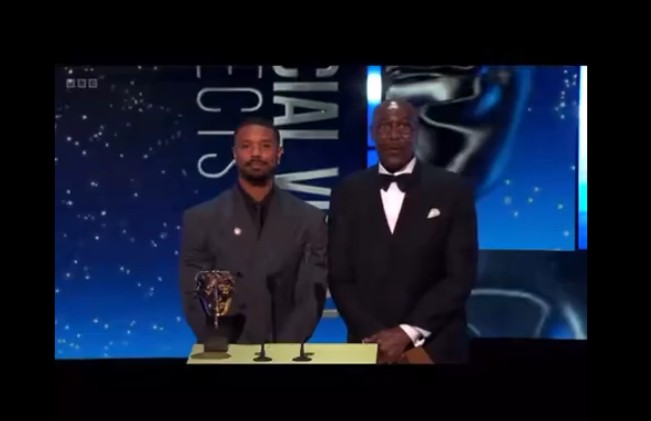
BAFTA Awards Racial Slur Controversy: What Happened
At the 2026 British Academy of Film and Television Arts (BAFTA) Film Awards on February 22, an involuntary racial slur was heard during the ceremony while Michael B. Jordan and Delroy Lindo were on stage presenting an award. The N word was shouted by an audience member, John Davidson, who has Tourette syndrome. Despite the ceremony being broadcast on a two-hour delay by the BBC, the offensive language was not edited out before the broadcast aired on BBC television and streamed on iPlayer, prompting widespread backlash and apologies from both BAFTA and the BBC. (The Guardian)
John Davidson is a Scottish campaigner and advocate for people with Tourette syndrome whose life inspired the biographical film I Swear, which was nominated at the BAFTAs. Davidson has a form of Tourette syndrome that can involve involuntary vocal tics — including socially inappropriate words — which he has lived with for many years and worked publicly to raise awareness about. (The Guardian)
During the BAFTA ceremony, Davidson’s vocal tic resulted in the racial slur while Black actors Michael B. Jordan and Delroy Lindo were presenting. BAFTA organizers had reportedly informed some attendees in advance that Davidson was present and that tics might occur, but they expected offensive language would be edited out of the broadcast — an expectation that was not fulfilled, leading to the tense situation. Davidson later expressed that his tics are involuntary and not reflective of his beliefs, and he was “deeply mortified” by the distress caused. (The Guardian)
The live ceremony was recorded and broadcast with a delay, but the BBC failed to remove the offensive slur before transmission. The broadcaster later apologized for this mistake, acknowledging the word should have been edited out. BBC executives also noted that another offensive word had been successfully removed but that the racial slur was missed, calling the incident “distressing” and saying it should never have been broadcast. They subsequently pulled the ceremony from iPlayer until the slur was removed. (Forbes)
BBC leadership, including chief content officers, apologized both publicly and internally to staff, and pointed to the challenges of anticipating all involuntary outbursts even with a delay. Still, critics argue the broadcaster should have exercised greater diligence, especially given prior warnings about Davidson’s condition. (Sky News)
Neither actor made highly public individual statements immediately during the initial wave of apologies, but their reactions have been reported in the context of how they handled the situation at the event:
- Delroy Lindo has been quoted expressing frustration that no BAFTA representative reached out to him or Michael B. Jordan directly after the incident, saying that they “did what we had to do” in the moment while presenting and that he wished someone from the organization had followed up with them afterwards. (Forbes)
- Michael B. Jordan’s team has been mentioned in coverage noting how neither he nor his co-presenter were contacted post-incident, and that both men continued professionally despite the unexpected outburst. (Forbes)
BAFTA also issued a formal statement apologizing “unreservedly” to both actors and “to all those impacted,” praising their dignity and professionalism in a difficult situation. (Sky News)
The controversy has ignited discussions about how disability, broadcast standards, and racial sensitivity intersect. Advocacy groups emphasized understanding Tourette’s syndrome and how coprolalia (involuntary speech of social taboo words) can occur, while critics argued that the institution and the broadcaster mishandled both the live ceremony and the taped broadcast. (Refinery29)
Warner Bros., whose film Sinners was being presented when the slur occurred, requested the incident be cut from the broadcast — but it still aired despite those concerns. (TheWrap)
Both BAFTA and the BBC have pledged reviews of their procedures for future events, with public apologies and promises to improve editing and on-site protocols. Davidson has also reiterated that his condition does not reflect his values, and he has continued advocating for Tourette syndrome awareness in subsequent statements. (The Guardian)
C. Stewart