 C. Stewart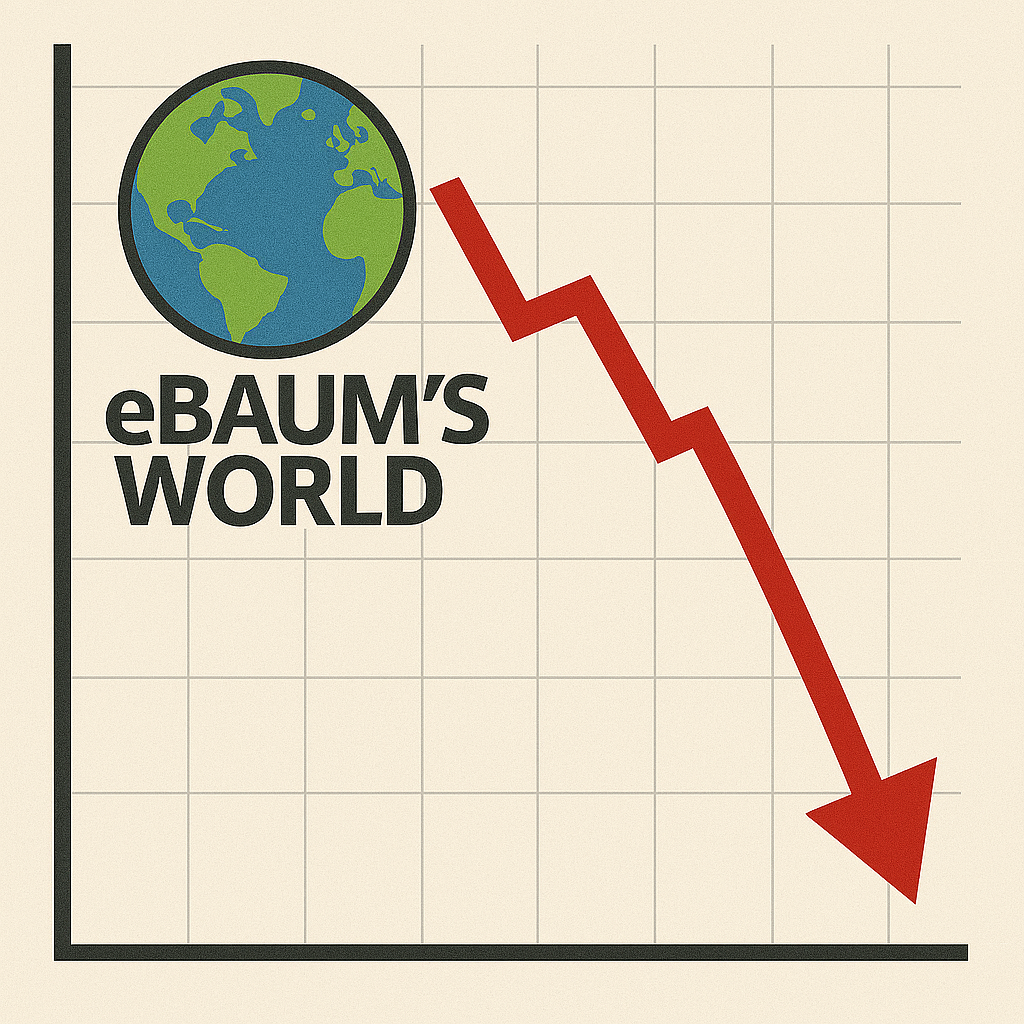
Before Social Media, There Was eBaum’s World
“If it was funny, shocking, or confusing enough, odds are you saw it on eBaum’s World first.”
Before YouTube, before Facebook, before TikTok—and long before memes were optimized by algorithms—there was eBaum’s World. For millions of early internet users in the late 1990s and early 2000s, it was the destination for shock humor, viral videos, bizarre Flash animations, and content that felt too weird or edgy for mainstream media.
At its peak, eBaum’s World helped define what “going viral” meant. At its lowest, it became a cautionary tale about attribution, internet ethics, and how quickly digital culture can abandon the platforms that helped create it.
This is the story of how eBaum’s World rose to dominate early internet humor—and why it ultimately lost its place at the center of online culture.
The Birth of eBaum’s World (2001)
eBaum’s World was founded in 2001 by Eric “eBaum” Bauman, with help from his father, Neil Bauman. The site launched during a time when the internet was still fragmented, slow, and largely unregulated. Social media did not exist in any recognizable form, and content discovery depended on:
- Message boards
- Email forwards
- AIM and MSN Messenger links
- Personal websites
- Flash animation portals
Rather than creating everything from scratch, eBaum’s World positioned itself as a central clearinghouse—a place where the funniest, strangest, or most shocking content from across the web could be collected and reposted.
The site featured:
- Flash animations
- Short video clips
- Funny images and GIFs
- Soundboards
- Browser games
- Shock humor and crude jokes
At the time, this approach felt less like theft and more like curation. For users, it was convenient. For creators, the consequences would come later.
The Golden Age: 2001–2006
“For a generation of users, eBaum’s World was the internet.”
A Viral Powerhouse
In the early 2000s, eBaum’s World exploded in popularity, becoming one of the most visited entertainment sites on the internet. Content spread through:
- Chain emails (“You HAVE to see this”)
- Instant messaging links
- Forum embeds and posts
If something was funny, shocking, or surreal, there was a strong chance people encountered it first on eBaum’s World.
The site became associated with:
- Early prank videos
- “Fail” clips before the term was common
- Absurd Flash cartoons
- Shock content mainstream platforms wouldn’t host
For many users, eBaum’s World wasn’t just a website—it was internet culture itself.
The Business Model: Aggregation Over Creation
“Curation turned into exploitation the moment credit disappeared.”
This success came with a cost.
Unlike platforms built around original submissions, eBaum’s World largely relied on aggregation, reposting material originally created by:
- Independent animators
- Flash artists
- Small humor websites
- Online communities like Newgrounds, Something Awful, Albino Blacksheep, and YTMND
Attribution was often missing, minimized, or removed entirely. In some cases, original watermarks were stripped and replaced with eBaum’s World branding.
In the early days of the web, norms around ownership were blurry. But as traffic—and ad revenue—grew, creators began to notice something unsettling: their work was making money for someone else.
The Backlash: Creator Revolt and Internet Feuds
“Among creators, eBaum’s World became a cautionary tale—and a punchline.”
By the mid-2000s, eBaum’s World had earned a notorious reputation among creators.
Artists and animators accused the site of:
- Rehosting content without permission
- Removing creator credits
- Monetizing stolen work
Communities like Newgrounds and Something Awful openly criticized eBaum’s World, discouraging users from visiting and publicly shaming the platform. Long-running “site wars” erupted, with eBaum’s World becoming shorthand for everything wrong with content farming.
Ironically, while creators despised it, casual users continued to flock to the site—unaware or unconcerned about where the content originated.
The YouTube Effect: A Cultural Earthquake
“YouTube didn’t just compete with eBaum’s World—it made it obsolete.”
In 2005, YouTube launched—and the internet changed permanently.
For the first time:
- Creators could upload directly
- Attribution was automatic
- Sharing was frictionless
- Viral fame benefited the original uploader
At the same time, platforms like Facebook, Reddit, and later Twitter reshaped how content spread. Discovery became decentralized. Aggregators lost their advantage.
eBaum’s World, built for an earlier internet, struggled to adapt.
The Sale and the Corporate Era
In 2007, eBaum’s World was sold to ZVUE Corporation in a reported multimillion-dollar deal. Ownership would later change again, eventually placing the site under Literally Media, a company that also owns Cheezburger and Know Your Meme.
This marked a turning point. What had once felt chaotic and underground now felt corporate and polished—without the cultural relevance to justify it.
To longtime users, the site’s personality was gone.
The Decline: 2010s and Beyond
“What once felt underground now felt like a content graveyard.”
By the 2010s, eBaum’s World was no longer where internet culture was born—it was where old jokes resurfaced.
Common criticisms included:
- Excessive advertising
- Clickbait headlines
- Recycled content from Reddit or TikTok
- Outdated humor
- Poor user experience
Unlike competitors that reinvented themselves, eBaum’s World never fully escaped its reputation as a content thief or relic of an earlier era.
The Legacy of eBaum’s World
Despite its fall, eBaum’s World left an undeniable mark on the internet.
What It Did Right
- Helped define viral content
- Centralized early internet humor
- Introduced millions to online culture
- Proved digital entertainment could scale massively
What It Did Wrong
- Failed to adapt ethically
- Ignored creator attribution
- Relied too heavily on aggregation
- Didn’t evolve fast enough
A Monument to the Early Internet
“eBaum’s World didn’t fail because it was evil—it failed because the internet outgrew it.”
eBaum’s World is best remembered not as a hero or a villain—but as a product of its time.
It thrived in an internet that:
- Had few rules
- Valued chaos over credit
- Rewarded whoever aggregated fastest
But when the internet matured, eBaum’s World didn’t grow with it.
Today, it exists primarily as a nostalgic artifact—a reminder of a wild, unregulated era when the internet felt strange, lawless, and new. Its rise showed how powerful viral content could be. Its fall showed how quickly power disappears when culture moves on.
eBaum’s World didn’t just lose relevance—it became history.
📦 Sidebar: The Monetization Scandal
How eBaum’s World Turned Viral Content Into Ad Inventory
As eBaum’s World’s audience exploded, so did its advertising revenue. Banner ads, pop-ups, and sponsorships surrounded videos, animations, and images that the site itself did not create.
This is where the criticism hardened.
Creators weren’t just upset about reposting — they were angry that their work had become commercial inventory. Traffic generated by uncredited animations and videos translated directly into profit for eBaum’s World, while the original creators often received nothing: no credit, no compensation, and no consent.
To many artists, this crossed a clear line. What once felt like chaotic internet sharing now looked like systematic exploitation. The site wasn’t simply curating culture — it was monetizing it at scale.
By the time eBaum’s World introduced limited creator payouts, trust had already eroded. For many creators, the damage was permanent. The internet was beginning to agree that viral fame without credit wasn’t harmless — it was theft with a business model.
C. Stewart





It’s amazing to think eBaum’s World was such a central hub before social media as we know it today. I was actually researching early internet culture and found some interesting related info on https://tinyfun.io/game/athena-match-2.
I’m really enjoying 66b1. Their website is great, and I found the games selection pretty good, and the bonuses are a nice little perk. Had a decent time overall! See what they offer: 66b1